

ResilientAfrica Network (RAN 1.0)
Launched in 2012 with USAID, the ResilientAfrica Network (RAN) is the largest network of African universities dedicated to strengthening the resilience of communities facing recurrent shocks and stresses, uniting 32 universities across 25 countries.
About the project
The ResilientAfrica Network (RAN) is the largest network of African universities dedicated to strengthening the resilience of communities that face recurrent shocks and stresses. Headquartered at Makerere University in Uganda and launched in 2012 in partnership with the United States Agency for International Development (USAID), RAN unites 32 African universities across 25 countries.
RAN operated as one of the development labs within USAID’s Higher Education Solutions Network, later housed in the US Global Development Lab. Members cluster around four regional Resilience Innovation Labs (RILabs) led by Makerere University for Eastern Africa, the University of Pretoria for Southern Africa, the University for Development Studies for West Africa, and Jimma University in Ethiopia for the Horn of Africa. Each lab runs as a semi-autonomous hub with a physical innovation space and a sub-network of three to five universities.
The network deliberately speaks of strengthening resilience rather than building it, recognizing that communities never start from zero and already hold capacities worth reinforcing. Its reach extends to communities contending with drought, flooding, conflict, displacement, rapid urbanization, and HIV/AIDS.
Objectives. RAN pursues three main aims: (1) to design and operationalize a scientific, data-driven resilience framework for sub-Saharan Africa; (2) to strengthen resilience at individual, household, and community levels through innovations that are identified, incubated, tested, and scaled with its partners; and (3) to run a learning platform that engages students, faculty, and development experts worldwide in solving well-defined challenges.
Rigorous, community-grounded research. RAN adapted Tulane University’s Disaster Resilience Leadership Academy model for African settings and applied it on the continent for the first time. Through focus group discussions and key informant interviews, RILab teams built a shared nexus of Common Resilience Dimensions spanning wealth, human capital, security and advocacy, social capital, psychosocial health, infrastructure, environment, health services, and governance.
Stanford’s Center for Deliberative Democracy contributed Deliberative Polling, which RAN introduced to Africa for the first time in Uganda and later extended to Ghana, Malawi, and Senegal. Scientifically representative samples of residents weigh policy options after receiving balanced briefings that reach low-literacy communities through video, giving their informed views a credibility that ordinary consultation cannot match. These deliberations have shaped real policy: in Uganda, community recommendations on landslide resettlement prompted the Office of the Prime Minister to identify alternative land in the Mount Elgon area and to amend resettlement law so that relocated families secure compensation and land ownership. Parallel polls in Malawi and Ghana reshaped community priorities on flood resettlement, water access, sanitation, and agricultural markets.
Innovation with reach and evidence. RAN identifies the entry points with the greatest potential and invites multidisciplinary teams to design solutions along priority pathways, then guides them through a disciplined pipeline of ideation, design, prototyping, piloting, and scale co-created with Stanford’s ChangeLabs. Selected teams earn incubation, training, mentorship, and seed capital, and every project carries a theory of change tested directly with partner communities. To date, RAN has supported more than 330 innovative solutions across renewable energy, water and sanitation, agriculture, food security, health, education, financial inclusion, and gender.
Lasting institutional capacity. RAN’s investment in people and institutions proves its most durable legacy. Where many African universities have long favored teaching over applied research and innovation, the network gathers engineers, health specialists, and social scientists around shared problems, sparking collaboration that rarely crossed faculty lines before. By linking universities through four regional labs, opening web-based educational resources, and building on trusted community relationships, RAN spreads analytical capacity outward and positions member institutions to share data and insight with peers, policymakers, and development partners. Its labs function as focal points for technology innovation and the commercialization of university research, drawing local and national resources with clear potential for replication across the continent.
Value for funders and development partners. For partners deciding where to commit resources, RAN offers a proven model and a deep evidence base. It shows that African universities can lead rigorous, sustained research with continental reach, that credible community and national measurement improves the design and uptake of policy, and that building on local strengths outperforms top-down programming. Its context-specific frameworks and internationally comparable benchmarks give ministries of health, education partners, and investors a reliable place to begin, while its emphasis on tracking change over time strengthens the case for long-horizon investment in health, livelihoods, and disaster preparedness. RAN’s work points to the openings, namely higher education, getting to the right African partners, and early-stage capital, and these are exactly where partner support can move the region furthest.
Reports and resources
 Enhancing Awareness and Response to Disaster Through Community RadioA 2017–2018 project, funded by the Humanitarian Leadership Academy, that used RootIO community radio stations to strengthen disaster awareness, preparedness and response in vulnerable Ugandan communities.View project
 Resilience Measurement, Evidence and Learning Community of PracticeA 2017–2018 project, funded by the Rockefeller Foundation through the Windward Fund, that built a Community of Practice to strengthen how resilience is measured, evidenced and learned from across development and humanitarian sectors.View project
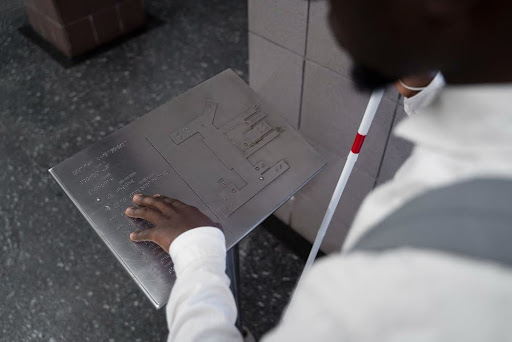 LASER-PULSEA five-year (2018–2023) USAID-funded program, led by Purdue University with RAN as a consortium partner, that built a global network of universities translating research into practical development solutions.View project
Have a challenge we could tackle together?
We partner with governments, universities, funders and communities to turn evidence and innovation into lasting resilience.