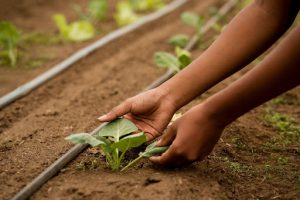


This collaborative research project (2018-2019) between Makerere University School of Public Health-ResilientAfrica Network (RAN) and the Women of Uganda Network (WOUGNET) and funded International Centre for Tropical Agriculture (CIAT), focused on the critical intersection of climate change, agricultural productivity, and food security in Uganda. The research addressed the pressing challenge of how smallholder farmers – who constitute the majority of Uganda’s population and are particularly vulnerable to climate variability – could adapt their agricultural practices to changing climatic conditions while contributing to climate change mitigation through sustainable land management.
The study employed a mixed-methods approach combining quantitative climate and crop modeling with qualitative participatory research with farming communities in selected districts representing different agro-ecological zones. The research had three main components: (1) An analysis of historical climate trends and future projections specific to agricultural growing seasons, identifying shifts in rainfall patterns, temperature increases, and changes in extreme weather events; (2) On-farm trials of climate-smart agricultural practices including drought-tolerant crop varieties, conservation agriculture techniques, agroforestry systems, and integrated soil fertility management; (3) Gender-disaggregated research on decision-making, labor patterns, and access to resources within farming households. The study also explored the institutional and policy environment for climate-smart agriculture in Uganda, analyzing the alignment of national policies with local realities and identifying opportunities for strengthening extension services, climate information systems, and financial products tailored to climate adaptation.
The study showed several climate related impacts affecting the agricultural sector in Uganda, including a reduction in crop yields for key staple foods like maize and beans, increased pest and disease pressure, and shortened growing seasons in some regions. The participatory research with farmers documented a rich diversity of indigenous adaptation strategies, from adjusting planting dates to diversifying crop mixes, but also identified barriers to adoption of more systematic climate-smart. The project developed locally-appropriate packages of climate-smart practices for different farming systems and produced communication materials in local languages to share research findings with farming communities.