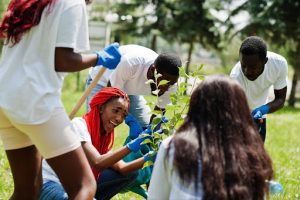


This project established a center of excellence for forestry and conservation at the University of Liberia, focusing on curriculum development, soft skills, and inclusive green enterprise. The project was implemented through a consortium led by the University of Georgia and including RAN as the monitoring, evaluation, and learning (MEL) partner, with funding from USAID. The project addressed critical capacity gaps in Liberia’s forest sector, where rich biodiversity and extensive forest resources contrasted with limited institutional capacity for sustainable management and conservation.
RAN’s specific role focused on developing and implementing a robust MEL framework that would not only track project outputs but also facilitate adaptive management and learning throughout the initiative. The MEL approach employed several elements: a theory of change co-developed with all consortium partners and Liberian stakeholders; mixed-methods data collection combining quantitative indicators with qualitative stories of change; participatory monitoring involving students, faculty, and community partners; and real-time data visualization dashboards for adaptive decision-making.
RAN’s MEL team worked closely with Liberian partners to build local MEL capacity, training University of Liberia staff in results-based project management, data collection methods, analysis techniques, and reporting processes. The MEL approach also incorporated principles of utilization-focused evaluation, ensuring that data collection addressed information needs of various stakeholders including students, faculty, university administrators, government partners, and local communities. Innovative data collection methods included digital portfolios tracking student competency development, network analysis mapping collaboration patterns within the forest sector, and outcome harvesting capturing emergent results from project activities.
The MEL system also monitored the project’s social inclusion objectives, tracking participation and outcomes for women, youth, people with disabilities, forest-dependent communities, and first-generation HEI students. Environmental sustainability metrics assessed how educational activities translated into improved conservation practices and reduced environmental impact.
Received French epi-surveillance translation task and initiated development work
Joined coordination call with Nadeen, Dr. Jalal, and Dr. Bashir to review and discuss WASH course slides
Extracted English instructions and cover slide content from epi-surveillance storyline for integration and sharing
Scoped and developed a range of case definition icon concepts; uploaded assets to Box for review
Continued development and translation of the French epi-surveillance module