
Supporting Holistic & Actionable Research in Education (SHARE)
A five-year (2020–2025) USAID cooperative agreement with the University of Notre Dame, in which RAN convened African university partners and managed a suite of education studies including LITES, HEIGHTS, NSSA, LIBROS, T2E+ and APIL.
About the project
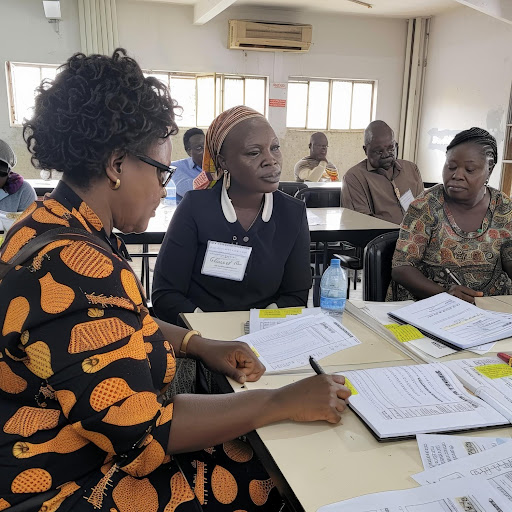
The SHARE (Supporting Holistic & Actionable Research in Education) program was a five-year (2020–2025) cooperative agreement between USAID and the University of Notre Dame. Its primary objective was to advance USAID’s global education learning priorities by improving learning outcomes worldwide. The initiative is implemented in collaboration with local higher education and research institutions across partner countries. SHARE aimed at producing high-quality, actionable evidence to inform education policy and practice. It involved conducting targeted, primary research designed to address specific learning questions.
RAN’s involvement in the SHARE program went beyond convening university partners on the African continent to conduct research on education programs; it also involved project management and providing technical capacity for a suite of studies addressing USAID’s education priorities. RAN also contributed to developing an updated learning agenda document for USAID in 2024.
A key feature of SHARE was an emphasis on local collaboration, ownership and capacity exchange. The studies under this program were conducted jointly with in-country universities and research organizations which provided opportunity to combine contextual expertise with mentorship/capacity building.
Studies under the SHARE program
01Learning Initiatives for Transformation and Equity in Schools (LITES)
The LITES (Language of Instruction Transition in Education Systems) study was a study conducted under the SHARE program with funding from USAID and led by the University of Notre Dame and the American Institutes for Research between 2021-2023. It studied how education systems can effectively transition instruction from a learner’s first language (L1) to their respective second language (L2) to improve literacy outcomes. While evidence shows that starting education in a child’s home language boosts learning, there is limited understanding of how to successfully add or transition to additional languages within school systems. The study also identified factors that make these language transitions successful for developing a learner’s L2 literacy skills.
The study used a mixed-methods approach across six countries: Senegal, Mali, Rwanda, Kenya, Mozambique, and the Philippines. It examined how system-level policies and their implementation affect learning outcomes in both their first and additional languages (L2 and L3 where applicable).
02Higher Education Institutions Generating Holistic and Transformative Solutions (HEIGHTS)
The HEIGHTS study was a dual-component research initiative, conducted from 2021-2024 in Indonesia, Kenya, and the Philippines in partnership with local universities or research institutions. The overarching goal of HEIGHTS was to generate evidence-based strategies to strengthen higher education systems. It involved studying two critical challenges facing higher education systems in low- and middle-income countries (LMICs): (1) Financial Sustainability (FS) and (2) Innovation Ecosystems (IE).
The Financial Sustainability (FS) study analyzed how governments and higher education institutions (HEIs) mobilize public and private resources to create stable funding models. It sought to identify the most effective strategies for ensuring that HEIs have the financial resilience to fulfill their educational missions, particularly following systemic shocks like the COVID-19 pandemic.
The Innovation Ecosystems (IE) study explored various roles HEIs play in regional economic development. It examined how universities contribute to local innovation solutions through research, skills development, and industry partnerships. The research focused on the actors, relationships, resources, and policies that enable HEIs to better align with the needs of knowledge-intensive sectors.
Both studies used a phased methodology: an initial literature review and stakeholder mapping, followed by participatory systems-thinking workshops with local stakeholders, and culminating in targeted interviews. This approach ensured that the findings generated are context-specific and actionable.
03Uganda Non-State Schools Assessment (NSSA)
The Uganda Non-State Schools Assessment was a study conducted under the SHARE program with funding from USAID and led by the University of Notre Dame. It was a mixed-methods study conducted in 2023, which aimed to evaluate the quality, accessibility, financial sustainability, and regulation of non-state (private) pre-primary and primary schools in urban and peri-urban areas of Uganda, one year after the country’s prolonged COVID-19 school closures.
The study investigated four key areas: 1) the factors driving or inhibiting education quality; 2) the barriers to access for marginalized learners (including those from low-income households, girls, and children with disabilities); 3) the effectiveness of government oversight and regulation; and 4) the schools’ financial health and resilience, particularly following the pandemic’s economic shock.
The research employed surveys with proprietors, teachers, and parent representatives across a nationally representative sample of 642 schools, alongside interviews with government officials and other stakeholders.
Key findings revealed that the COVID-19 pandemic exacerbated the challenges that were faced by the non-state schools, causing enrolment declines (especially for girls), increased learning loss, and severe financial strain that led to some school closures. The study also identified significant gaps in access for learners with disabilities and systemic challenges in government inspection and enforcement of standards.
04Learning to Improve Book Resource Operational Systems (LIBROS)
The LIBROS Rwanda study examined how multilateral partnerships have strengthened the country’s book supply chain and improved children’s access to quality learning materials. Conducted under the SHARE initiative, the study focused on the partnerships that have brought together government institutions, development partners, non-governmental organizations, publishers, authors, illustrators, and local communities to support the development, distribution, and use of textbooks and children’s reading books. RAN implemented this study in collaboration with key partners including University of Notre Dame and University of Rwanda.
The research was driven by the need to understand how collaboration can address persistent shortages of books and promote better learning outcomes in primary education. The study sought to achieve four main objectives. First, it explored the characteristics of the partnerships and their contribution to book title development and book use. Second, it examined the conditions that enabled these partnerships to emerge and operate successfully. Third, it identified the challenges that affected implementation and the support needed to strengthen future efforts. Finally, it generated evidence and practical recommendations that can inform policy and guide other low and middle income countries seeking to improve their own book supply systems.
Using a qualitative case study approach, the research gathered perspectives from government officials, development partners, publishers, authors, school leaders, teachers, parents, and learners across Rwanda. The findings show that strong leadership from the Ministry of Education, together with coordinated action through the Education Sector Working Group, created an environment where partners could align their efforts with national education priorities. The study also found that collaboration improved the quality and relevance of learning materials by encouraging content that reflects Rwanda’s culture, language, and history. Partnerships contributed to better book management practices in schools and increased the involvement of parents and communities in children’s reading activities.
Despite these achievements, the study identified several challenges that continue to affect the book supply chain such as lengthy book review and approval processes, concerns over intellectual property arrangements, among others. These issues highlight the importance of sustained investment, clear coordination mechanisms, and policies that balance public access with the interests of local creators.
The LIBROS Rwanda study demonstrates that effective partnerships can play a significant role in improving the availability, quality, and use of learning materials. The lessons from Rwanda offer a valuable example for other countries seeking to build stronger education systems through coordinated action and shared commitment.
05Transition-to-English Plus (T2E+): Strengthening Early Reading in Ghana
Reading opens the door to every other subject a child will study, yet many early-grade learners in Ghana have long struggled to read with understanding in any language. The Transition-to-English Plus Activity (T2E+) set out to change that. Running from July 2021 to March 2023, the program reached children from Kindergarten to Basic 3 in 5,425 public primary schools across all 16 regions, touching more than 800,000 learners and over 22,000 teachers.
Children move into English reading more smoothly once they have a firm grip on reading in their mother tongue, and the program was built around that principle. Teachers opened with local-language instruction in September 2021 and brought in English lessons in January 2022, pairing scripted lessons, learner and caregiver materials, and radio reading broadcasts with steady classroom support.
USAID Ghana asked the Supporting Holistic and Actionable Research in Education (SHARE) mechanism to test whether the approach worked. The University of Notre Dame led the study alongside the ResilientAfrica Network (RAN) and the University for Development Studies. Through a randomized controlled trial, the team weighed 100 schools receiving T2E+ against 99 that did not, assessing pupils in Basic 2 and Basic 3 on reading and oral language skills in both English and the Ghanaian language of instruction.
The evaluation sought to meet five objectives:
- Measure how T2E+ affected children’s reading and language skills
- Check whether boys and girls gained equally
- Identify the conditions that made the program work across different schools
- Establish the average cost per learner
- Explore how growth in local-language reading relates to growth in English reading
Pupils in T2E+ schools outperformed their peers on every reading skill measured, in both languages and at both grade levels, with effects ranging from medium to large. Basic 3 learners in program schools read six more English words per minute and four more in their local language than children in comparison schools. Far fewer pupils scored zero, many more reached national reading benchmarks, and Basic 3 children also advanced in spoken English abilities such as vocabulary and comprehension. Girls and boys benefited to the same degree, and the gains held whether a school sat in a town or a village and whether it served wealthier or poorer families.
Strong local-language reading went hand in hand with stronger English reading, confirming the value of the mother-tongue foundation. Teachers, headteachers, and district officials credited four ingredients for the results: well-structured materials tied to the national curriculum, practical and hands-on teacher training, regular coaching and mentorship, and continuous tracking of pupil progress.
All of this cost roughly $5.31 per child, a modest price for a measurable lift in literacy.
The evidence gives Ghana’s Ministry of Education and its partners solid grounds to widen the program’s reach, publish and share its teaching materials, and keep investing in the training and monitoring that let teachers do their best work. T2E+ demonstrates that Ghana’s multilingual education policy can deliver real gains for young readers when schools receive the support they need.
06Advancing Partnerships for Improved Learning (APIL) Impact Evaluation
The primary purpose of this study was to determine the effectiveness and impact of the APIL project, a 5-year intervention designed to strengthen Low-Cost Private Schools (LCPS) in Northern Ghana. APIL aims to improve student learning outcomes and school sustainability by focusing on three components: 1) enhancing school leadership and business skills, 2) providing teacher training and professional development, and 3) increasing access to financing for LCPS.
The core research focus was to measure the program’s impact on Grade 2 learners’ reading skills and primary completion rates, identify factors affecting implementation effectiveness, and analyze the program’s cost-effectiveness. The evaluation used a cluster randomized controlled trial (RCT) design. From a sampling frame of 213 LCPS across 17 districts in Northern Ghana, 142 schools (Cohort 1) were assigned to receive the APIL intervention (treatment group) starting in 2024, while 71 schools (Cohort 2) served as a control group.
Data collection at baseline (and later at endline) involved various instruments: Early Grade Reading Assessment (EGRA) tests for students, background surveys for students and teachers, headteacher/proprietor surveys, and classroom observations. The planned sample includes approximately 2,556 Grade 2 students, 426 teachers, and 213 headteachers. Quantitative data will be analyzed using a difference-in-differences method to estimate the average treatment effect of the APIL Activity.
The evidence generated informed USAID/Ghana, the Ministry of Education, and other stakeholders about the program’s effectiveness and the conditions for its success, guiding potential scaling decisions and future policy for supporting LCPS in underserved regions.
Reports and resources
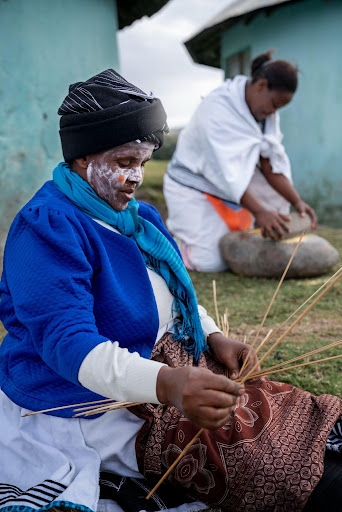 Voices of the Indigenous People of UgandaA four-year (2019–2023) LASER-PULSE buy-in project documenting and seeking solutions to the marginalization and human rights challenges facing the Batwa, Ik and Tepeth indigenous communities of Uganda.View project
 LASER-PULSEA five-year (2018–2023) USAID-funded program, led by Purdue University with RAN as a consortium partner, that built a global network of universities translating research into practical development solutions.View project
 ADAPT: 21st Century Skills in East AfricaA six-month research and capacity-building initiative (2022–2023), funded by GESCI through the University of Notre Dame, that mapped how 21st century skills are integrated into education systems in Kenya, Uganda and Tanzania.View project
Have a challenge we could tackle together?
We partner with governments, universities, funders and communities to turn evidence and innovation into lasting resilience.