

Impact of COVID-19 on Gender-Based Violence
Impact of the COVID-19 pandemic on Gender-Based Violence among women and girls in informal settlements in Kampala
Studied COVID-19’s impact on gender-based violence in Kampala’s informal settlements using photovoice methodology.
About the project
This research study (2022-2023), funded by USAID through the National Academy of Sciences, investigated how the COVID-19 pandemic affected gender-based violence (GBV) among women and girls in informal settlements in Kampala, Uganda. The research addresses critical evidence gaps about how public health crises and associated response measures intersect with existing vulnerabilities to exacerbate GBV risks.
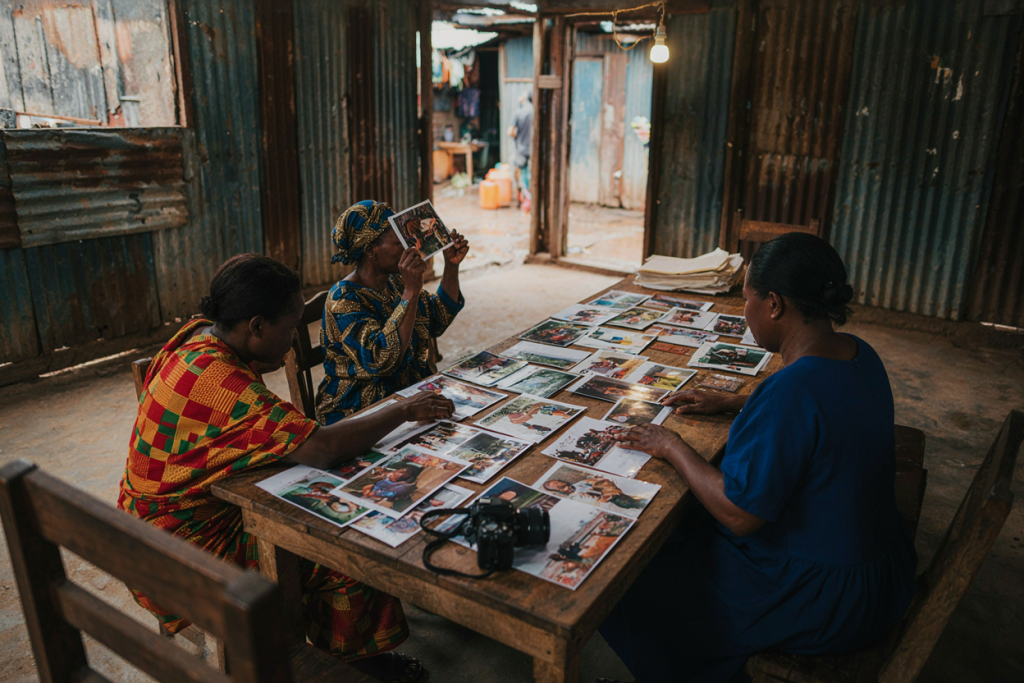
The study employs photovoice methodology – a participatory visual research approach that empowers participants to document and analyze their lived experiences through photography. This method is particularly appropriate for capturing nuanced, context-specific impacts of COVID-19 on GBV while centering the perspectives of those most affected. The research engages women and girls from multiple informal settlements in Kampala, training them in ethical photography, reflective writing, and group analysis processes. Participants document various aspects of their COVID-19 experiences: changes in household dynamics and gender roles during lockdowns; economic stressors and their impact on intra-household relations; access to GBV services during movement restrictions; community responses to increased GBV risks; and coping strategies developed by women and girls. The photovoice process creates safe spaces for dialogue about sensitive topics while generating rich visual and narrative data about how macro-level crises manifest in micro-level experiences of violence and resilience.
The research examines multiple pathways through which COVID-19 affected GBV: economic pathways as livelihoods were disrupted increasing household tensions; isolation pathways as lockdowns trapped women with abusive partners and limited escape options; service disruption pathways as GBV support services were interrupted or repurposed for COVID-19 response; and coping strategy pathways as survival pressures led to risky behaviors. The study also documents innovative community-led responses to increased GBV risks during the pandemic, including informal warning systems, safe house networks, and digital support groups.
A distinctive feature is the longitudinal dimension, tracking how GBV risks evolved through different phases of the pandemic – initial lockdowns, gradual reopening, subsequent waves, and recovery periods – providing insights about both immediate crisis impacts and longer-term adaptations.
Ethical considerations are paramount, with robust safety protocols for participants discussing GBV experiences, trauma-informed facilitation approaches, and clear referral pathways for those needing support.
The research builds participants’ skills in visual storytelling and advocacy, empowering them to use their photographs and narratives to influence policy and programming responses. Findings contribute to global understanding of how pandemics affect GBV while providing locally-grounded evidence to inform more gender-responsive crisis preparedness and response planning in Uganda.
The photovoice methodology itself becomes an intervention, fostering reflection, solidarity, and advocacy capacity among participants while generating compelling evidence that challenges policymakers and practitioners to see GBV through the eyes of those experiencing it.
 Resilience Measurement, Evidence and Learning Community of PracticeA 2017–2018 project, funded by the Rockefeller Foundation through the Windward Fund, that built a Community of Practice to strengthen how resilience is measured, evidenced and learned from across development and humanitarian sectors.View project
 HCD and Co-creation to End Violence Against Women and GirlsA UN Women-funded project (2016–2022) that equipped communities across Uganda with human-centred design and co-creation skills to develop their own solutions to violence against women and girls.View project
 Enhancing Awareness and Response to Disaster Through Community RadioA 2017–2018 project, funded by the Humanitarian Leadership Academy, that used RootIO community radio stations to strengthen disaster awareness, preparedness and response in vulnerable Ugandan communities.View project
Have a challenge we could tackle together?
We partner with governments, universities, funders and communities to turn evidence and innovation into lasting resilience.