


Informal Settlements in Uganda
A study funded through The Medical College of Wisconsin on living conditions, health challenges and gender-based violence in Kampala's informal settlements, to inform more responsive urban policy and services.
About the project
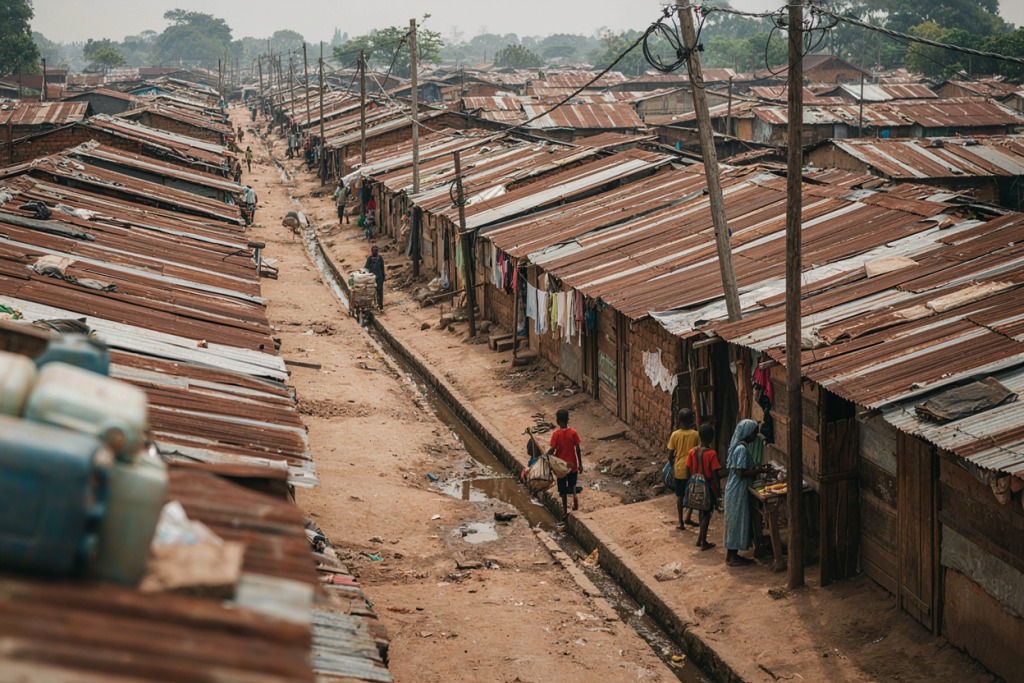
This study was funded through The Medical College of Wisconsin to investigate the living conditions, health challenges, and gender-based violence in informal settlements in Kampala city, Uganda. The research aimed to generate evidence to inform more responsive urban policies in Kampala, and improve service delivery approaches in informal settlements. The study addressed critical knowledge gaps related to the context of rapidly urbanizing communities in a low- and middle-income country, characterized by inadequate housing, limited basic services, tenure insecurity, and complex social dynamics. By foregrounding the perspectives and experiences of informal settlement residents themselves, the study challenged the systematic marginalization of informal settlement communities while providing practical insights for addressing the profound challenges facing Uganda’s rapidly growing urban populations living in informal conditions.
The study used a participatory mixed-methods design that combined quantitative surveys with in-depth qualitative approaches including photovoice, community mapping, and life history interviews. Study sites include multiple informal settlements in Kampala City, which were collaboratively selected (together with key stakeholders including City council authorities, representatives from informal settlements, CSOs and researchers) to represent different types of informal settlements.
The study examined multiple interconnected dimensions: housing conditions and land and tenure security, analyzing how residents navigate informal land acquisition and housing arrangements and conditions; access to basic services including water, sanitation, electricity, and waste management; health challenges, particularly infectious diseases, environmental health risks, and non-communicable diseases; economic livelihoods in the informal economy; social networks and community organization; and governance arrangements including relations with formal authorities and internal dispute resolution mechanisms, especially how these relate to gender-based violence. Specifically with the latter, the project examined its prevalence and forms among women and girls in the informal settlements, risk factors, and coping mechanisms. The study used innovative methodologies appropriate for informal settlement contexts like participatory GIS mapping to document spatial patterns of housing and access to services in the settlements; time-use diaries tracking daily routines and exposure to risks; and arts-based methods engaging youth and other hard-to-reach groups.
The findings revealed complex resilience strategies employed by informal settlement residents despite severe constraints, the creative informal service provision systems that have emerged, and the nuanced social contracts governing life in these spaces to address critical challenges such as gender-based violence.
 ResilientAfrica Network (RAN 1.0)Launched in 2012 with USAID, the ResilientAfrica Network (RAN) is the largest network of African universities dedicated to strengthening the resilience of communities facing recurrent shocks and stresses, uniting 32 universities across 25 countries.View project
 LASER-PULSEA five-year (2018–2023) USAID-funded program, led by Purdue University with RAN as a consortium partner, that built a global network of universities translating research into practical development solutions.View project
 HCD and Co-creation to End Violence Against Women and GirlsA UN Women-funded project (2016–2022) that equipped communities across Uganda with human-centred design and co-creation skills to develop their own solutions to violence against women and girls.View project
Have a challenge we could tackle together?
We partner with governments, universities, funders and communities to turn evidence and innovation into lasting resilience.