


Next Generation Tent for Ebola Treatment (EpiTent)
A USAID-funded innovation project that designed, prototyped and tested EpiTent, an improved tent system for Ebola treatment units and humanitarian care in hot, humid climates.
About the project
This was an innovation project implemented with funding from USAID. It addressed a critical shelter challenge in Ebola outbreak response, including the inadequacy of standard humanitarian tents for treatment units in hot, humid climates. During the 2014-2016 West Africa Ebola epidemic, treatment facilities faced extreme operational difficulties with conventional tents, including unbearable interior humid temperatures that endangered both patients and healthcare workers, poor infection control due to inadequate separation between zones, and rapid material degradation in tropical conditions. This project brought together expertise in public health, materials science, humanitarian engineering, and field operations to design, prototype, and test an improved tent system specifically optimized for Ebola treatment in hot climates.
The innovation process began with extensive field research in affected regions, documenting user experiences and identifying pain points through interviews with healthcare workers, facilities managers, and patients. This human-centered approach revealed that the problem extended beyond temperature control to encompass workflow efficiency, infection prevention, staff well-being, and rapid deployment requirements. The design team then developed a modular tent system with several key innovations: advanced insulation and ventilation systems that maintained safer interior temperatures without excessive energy consumption; color-coded and clearly demarcated zones following Ebola treatment unit protocols; integrated water collection and management systems for infection control; durable, mold-resistant materials suitable for prolonged use in humid conditions; and rapid deployment mechanisms that reduced setup time from days to hours.
Prototypes underwent rigorous testing in simulated tropical environments, evaluating thermal performance, structural integrity under wind and rain, infection control effectiveness, and usability for medical procedures. Beyond its immediate application for Ebola, the tent system demonstrated adaptability for other outbreak responses and humanitarian settings requiring isolation and infection control in hot climates.
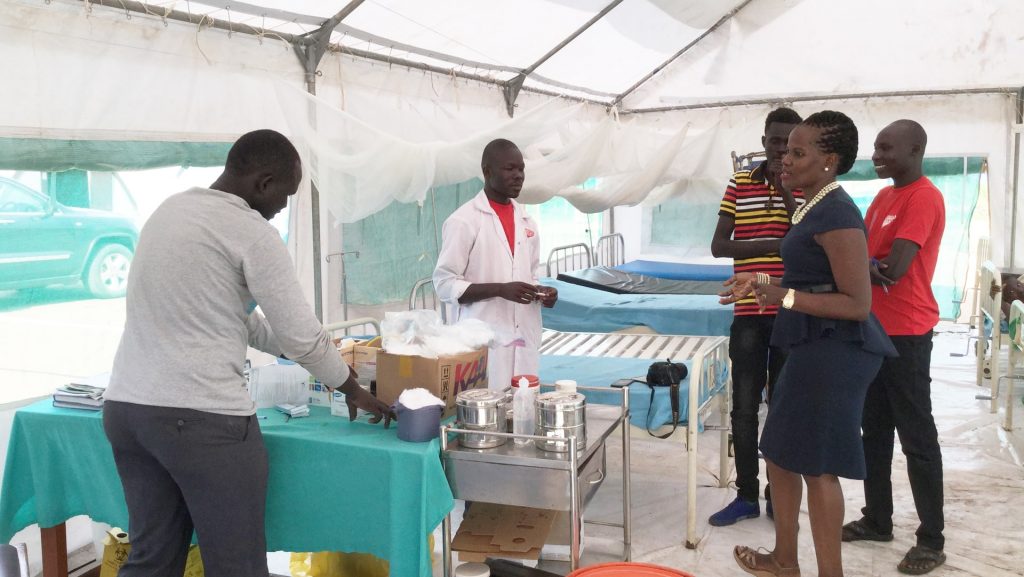
The EpiTent has been extensively deployed in various institutions and settings in Uganda, including the Uganda Cancer Institute, Masaka Regional Referral Hospital and Mbale Regional Referral Hospital.
Reports and resources
 Scaling Off-grid Energy – Workforce Development ProgramThis three-year workforce development initiative was implemented in 2019-2022 with funding from USAID, and focused on capacity building for the off-grid energy sector.View project
 Applied Innovation HESN Activities – CDIRAN supported two innovators (Akorion and M-Omulimisa) with scaling support through a nine-month innovation acceleration initiative between 2018-2019 with funding from USAID.View project
 Celestini UgandaAn ICT innovation fellowship program (2021–2023) run by RAN with the Research and Education Network for Uganda (RENU), funded by The Marconi Society, to nurture connectivity innovators solving last-mile connectivity challenges.View project
Have a challenge we could tackle together?
We partner with governments, universities, funders and communities to turn evidence and innovation into lasting resilience.