


Climate Change, Agriculture and Food Security
A 2018–2019 research project by RAN and the Women of Uganda Network (WOUGNET), funded by CIAT, on how smallholder farmers in Uganda can adapt to climate change while protecting food security.

About the project
This collaborative research project, carried out between 2018 and 2019 by Makerere University School of Public Health–ResilientAfrica Network (RAN) together with the Women of Uganda Network (WOUGNET) and funded by the International Centre for Tropical Agriculture (CIAT), focused on the critical intersection of climate change, agricultural productivity, and food security in Uganda. The research addressed a pressing challenge, namely how smallholder farmers, who make up the majority of Uganda’s population and are especially vulnerable to climate variability, could adapt their agricultural practices to changing conditions while also contributing to climate change mitigation through sustainable land management.
The study pursued three connected objectives. It set out to analyse historical climate trends and future projections specific to agricultural growing seasons, giving attention to shifts in rainfall patterns, rising temperatures, and changes in extreme weather events. It sought to test climate-smart agricultural practices through on-farm trials, including drought-tolerant crop varieties, conservation agriculture techniques, agroforestry systems, and integrated soil fertility management. It also aimed to examine decision-making, labour patterns, and access to resources within farming households through gender-disaggregated research. To ground these objectives, the team combined quantitative climate and crop modelling with participatory research among farming communities in selected districts that represented different agro-ecological zones. The study further explored the institutional and policy environment for climate-smart agriculture, analysing how well national policies aligned with local realities and identifying opportunities to strengthen extension services, climate information systems, and financial products suited to climate adaptation.
The synthesis of the data found several climate-related impacts affecting Uganda’s agricultural sector. These included reduced yields for key staple foods such as maize and beans, increased pest and disease pressure, and shortened growing seasons in some regions. The participatory research documented a rich diversity of indigenous adaptation strategies, ranging from adjusting planting dates to diversifying crop mixes, while also revealing the barriers that prevented wider adoption of more systematic climate-smart approaches. Taken together, these findings pointed to a clear conclusion that farmers were already responding to climate change through their own knowledge and experience, but that they needed better support to move from isolated coping measures toward more reliable and sustained adaptation.
Guided by this evidence, the project developed locally appropriate packages of climate-smart practices tailored to different farming systems, so that recommendations reflected the realities of each context rather than a single general prescription. It also produced communication materials in local languages, which allowed the research findings to reach farming communities directly and in a form they could readily use.
The lasting value of the project rests in the way it connected rigorous analysis with the lived experience of farming households. By bringing climate modelling, on-farm trials, and gender-disaggregated research into a single body of evidence, the initiative offered a fuller understanding of how climate change is reshaping agriculture in Uganda and of what practical support smallholder farmers require. In doing so, it strengthened the foundation for climate adaptation efforts that are both scientifically grounded and rooted in the needs of the communities they are meant to serve.
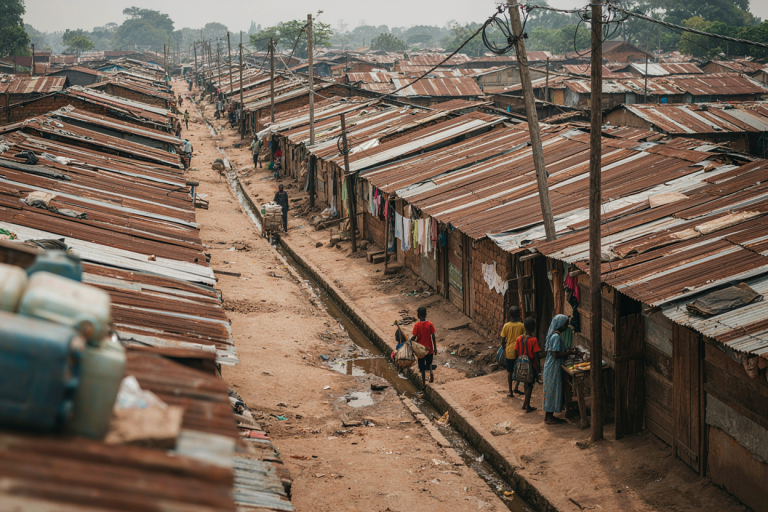 Informal Settlements in UgandaA study funded through The Medical College of Wisconsin on living conditions, health challenges and gender-based violence in Kampala's informal settlements, to inform more responsive urban policy and services.View project
 System and Complexity Monitoring, Evaluation, Research and LearningA four-year collaboration (2015–2019) between Makerere University School of Public Health–ResilientAfrica Network (RAN) and Johns Hopkins University, funded by USAID, to bring systems thinking and complexity-aware approaches into monitoring, evaluation, research and learning for development programming.View project
 Community and Regional COVID-19 Outbreak ResilienceA rapid assessment (June–September 2020) with The QED Group and USAID/Uganda of how COVID-19 and the national lockdown affected health services, schooling, livelihoods and businesses across Uganda's regions.View project
Have a challenge we could tackle together?
We partner with governments, universities, funders and communities to turn evidence and innovation into lasting resilience.