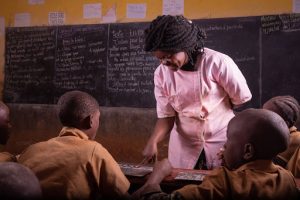


This was a USAID funded four-year (2020-2024) program evaluation funded by USAID through the LASER-PULSE consortium, and it assessed Somalia’s Accelerated Education Program (AQLE) to identify effective and cost-efficient models for delivering accelerated education in fragile contexts. The evaluation addressed critical knowledge gaps in accelerated education, which was an approach designed to help over-age, out-of-school children and youth to complete primary education in compressed timeframes.
The evaluation team from Purdue University, Somalia Disaster Resilience Institute (SORDI), and Makerere University School of Public Health-RAN developed context-appropriate assessment tools that accounted for Somalia’s challenges including varying levels of prior schooling interruption, and the need for trauma-sensitive approaches to data capture. Operating in one of the world’s most challenging conflict stricken environments, the evaluation used ecological frameworks and employed a mixed-methods design combining quantitative tools, qualitative case studies, implementation fidelity analysis, and cost-effectiveness analysis.
The evaluation examined multiple dimensions of program effectiveness: learning outcomes in literacy and numeracy using before-after comparisons and comparison groups; equitable access analyzing enrollment patterns across gender, displacement status, and age groups; and retention rates in the accelerated program.
The evaluation also captured lessons for scaling, identifying critical success factors for scale including government ownership, community acceptance, teacher supply strategies, and flexible adaptation to local security conditions. The findings from the evaluation informed adjustments to teacher training approaches, curriculum pacing foe accelerated education, and community engagement strategies.